MITRE’s D3FEND changed the way defenders describe their work. It gave us a structured vocabulary for defensive techniques, mapping countermeasures such as application hardening, email filtering, and network traffic analysis to the adversary behaviors in ATT&CK. It brought order to how we talk about protection.
While D3FEND defines what defenses exist, it stops short of showing how investigations unfold once those defenses are tested. That is where the TENSOR Framework begins. D3FEND describes what can defend. TENSOR describes how defenders investigate.
Even with shared frameworks like D3FEND, investigations still happen in isolation. Every organization develops its own logic for moving from alert to understanding, even though the challenges are nearly identical. Analysts jump between tools that were never designed to work together, translating evidence by hand and repeating the same steps across platforms. Context is lost, automation stalls, and valuable insights stay locked in tribal knowledge.
AI can accelerate enrichment, but without a shared structure for reasoning, it cannot truly assist. The result is familiar: duplicated playbooks, inconsistent outcomes, and slower investigations that depend more on individual experience than collective intelligence.
What has been missing is a standard for how investigations actually flow, a way to represent reasoning itself. TENSOR fills that gap by turning investigation into a structured, shareable language that connects tools, teams, and AI systems alike.
TENSOR, Threat Evaluation and Neutralization through Structured Organizational Resilience, builds on D3FEND by providing a common reasoning model for investigations. It is not another product or checklist. It is a framework for understanding how evidence, context, and hypotheses connect across the modern attack surface.
TENSOR defines seven investigative domains: Application, Cloud, Email, File, Host, Identity, and Network. Any one of these can be the entry or exit point of an investigation.
-
A phishing email may link to a file.
-
The file may execute on a host.
-
The host may generate suspicious network traffic.
-
That traffic may involve stolen credentials in a cloud account.
There is no first or final step, only relationships. TENSOR models those relationships so investigations can follow logic instead of static playbooks.
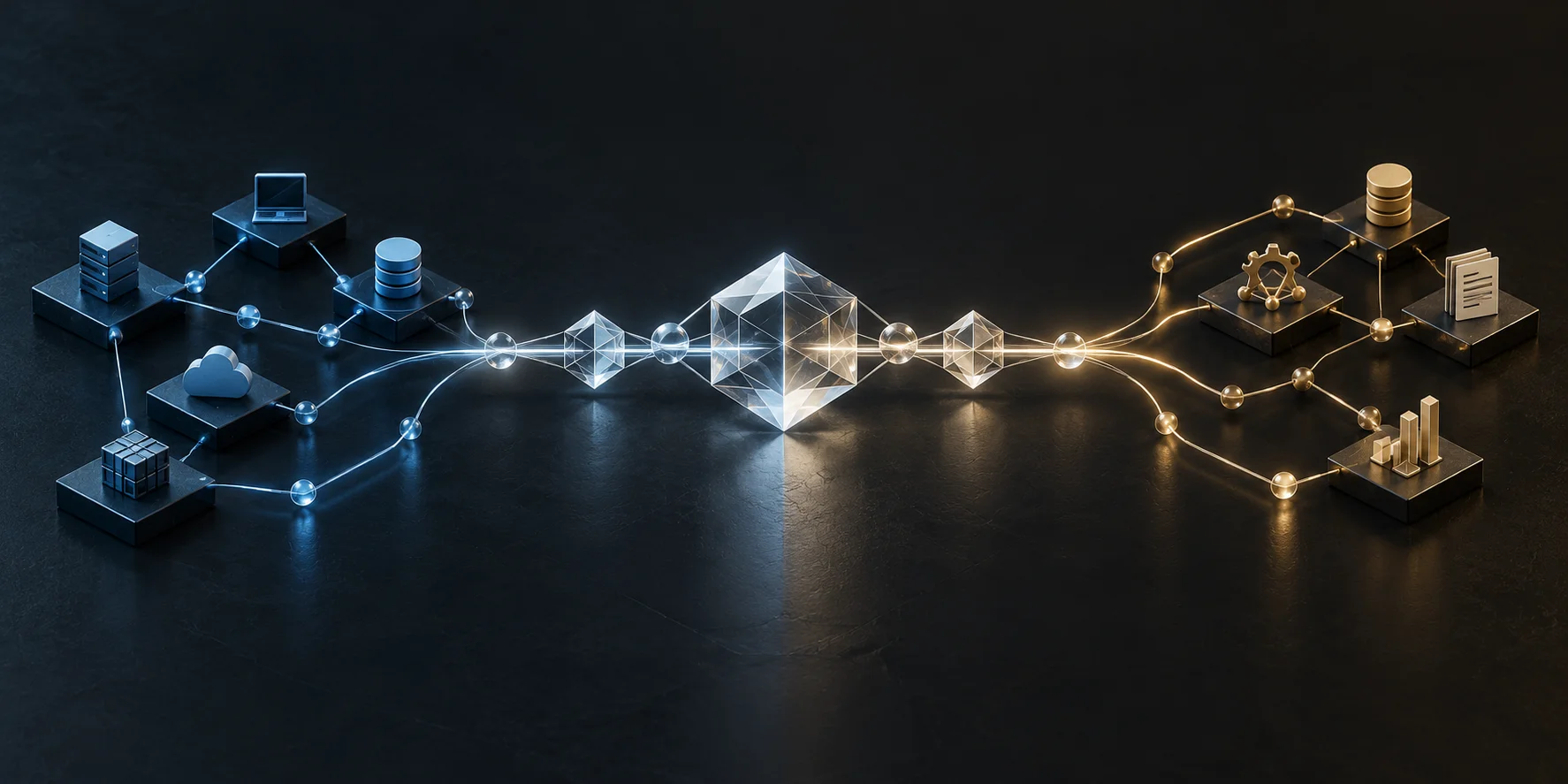
TENSOR is not one giant playbook. A playbook tells you what to do when a specific event occurs. TENSOR provides the structure that makes every playbook compatible. It describes the relationships between data, actions, and systems in a consistent way so analysts, tools, and even AI agents can reason through an investigation collaboratively. It is the shared grammar beneath every team’s individual language of response.
TENSOR does not replace existing tools or workflows. It gives them structure.
-
CrowdStrike could define that if node “Host:Malicious Execution” is true, Falcon isolates the endpoint.
-
Google SecOps might add that if node “Network:Suspicious Egress” is true, GSO automatically enriches the alert.
-
Microsoft could layer that if node “Identity:High-Risk Sign-in” is true, Conditional Access enforcement triggers.
-
An organization can extend that logic: if “Host:Critical Asset Compromised” is true, notify the CISO; if confirmed, brief the executive leadership team.
Each organization and vendor can map their own actions on top of the same shared investigative language. That common foundation means investigations are consistent, measurable, and transferable. If an external incident response team ever needs to join, they can plug in immediately and understand what has already been done.
The initial version of TENSOR is available on GitHub at https://github.com/TENSOR-Standards-Consortium/TENSOR-Framework
It is not a finished product. It is a starting point. The framework should evolve through collaboration between defenders, vendors, and researchers. Its goal is simple: to improve the quality and continuity of investigations and create a consistent reasoning layer that transcends technology stacks.
The vision for TENSOR goes beyond individual organizations. It is meant to become a shared standard for how investigations are represented and communicated. Imagine a future where incident response data from one company can be understood instantly by another, where blue teams and vendors collaborate in the same language, and where collective defense is built into the very structure of investigation itself. That is what TENSOR is designed to make possible.
When every organization uses the same investigative grammar, onboarding is faster, automation becomes smarter, and collaboration moves from theory to reality. D3FEND gave us the defensive nouns. TENSOR gives us the investigative verbs. Together, they connect posture with action and prevention with understanding.
Cybersecurity needs a shared language for how we investigate and respond together.
#CyberSecurity #D3FEND #MITRE #ATTACK #TENSOR #IncidentResponse #DFIR #BlueTeam #SOC #OpenStandards #SharedLanguage #CyberDefense #Resilience #ThreatIntel #DigitalForensics #SecurityFramework #OperationalResilience #CollectiveDefense #CommunityDriven #AI #Auditability